Systemic Risk in Food Supply Networks
Food systems are interconnected networks, not simple linear supply chains. A shock to one part of the system — a failed harvest, a port closure, a conflict event — can create ripple effects that influence prices, availability, and access elsewhere. Our research uses tools from network science to understand these interdependencies and identify where small disruptions may lead to larger systemic risks.
Why This Matters
Understanding how food networks are connected helps us:
- Detect emerging vulnerabilities earlier
- Anticipate where disruptions may spread
- Prioritize interventions where they will have the greatest impact
What We Study
Interdependence:
Food systems link production regions, transport corridors, markets, and households. Mapping these connections shows how a disruption in one location can affect many others.
Robustness and Fragility:
Systems that work efficiently in stable conditions can become surprisingly fragile under stress. We explore how diversification and redundancy can strengthen resilience.
Critical Nodes:
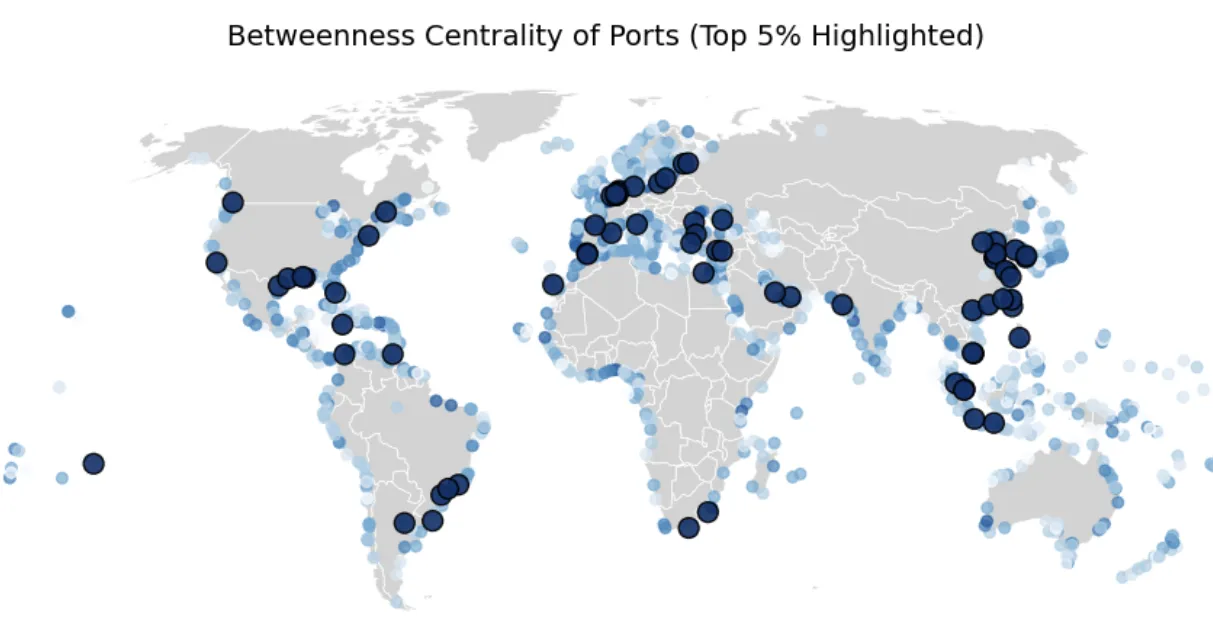
Certain ports, market hubs, or trade routes are especially influential. Identifying these helps us understand where disruptions could have the largest downstream effects — and where support can be targeted most effectively.
Cascading Effects:
Local shocks can escalate into widespread impacts. Studying how these cascades form helps us recognize early signals before crises deepen.